

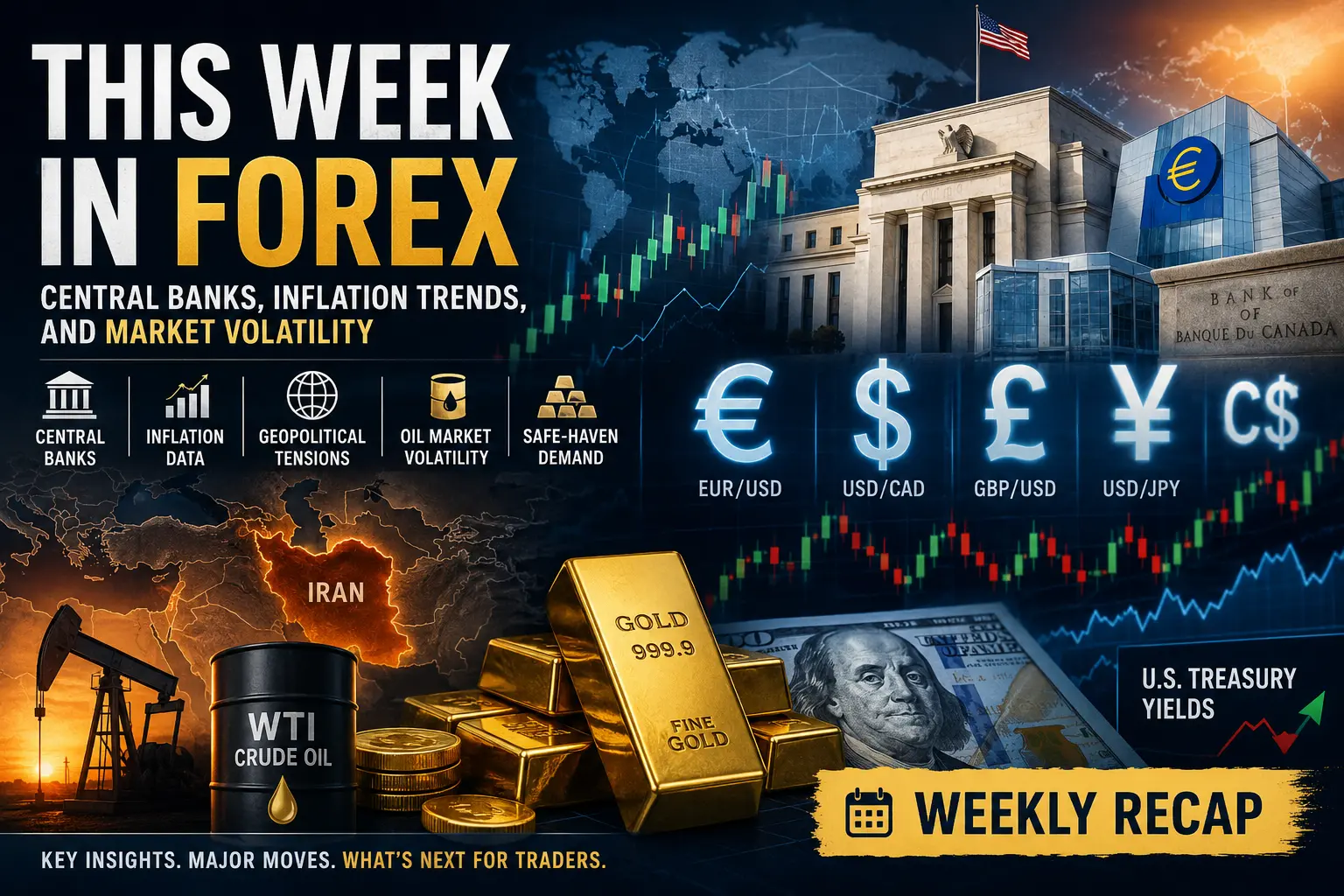
This Week in Forex: Central Banks, Inflation Trends, and Market Volatility
Other Post


Stay ahead of the market moves.
×
Subscribe to Market Updates
Enter your email below to receive weekly market insights.
Forex Weekly Recap
June 08 - June 12
This week delivered a powerful mix of inflation surprises, central bank signals, and geopolitical developments that reshaped market sentiment across currencies and commodities. Traders navigated shifting expectations for future interest rates, closely watched ECB and Bank of Canada policy guidance, and reacted to escalating tensions in the Middle East, which kept oil and gold markets on edge.
As volatility returned to key assets, understanding the drivers behind these moves became essential. In this edition, we analyze the week's biggest market catalysts, impacted trading instruments, and the opportunities and risks that could shape trading decisions ahead.
US Inflation Data Reinforces Expectations for Future Federal Reserve Interest Rate Decisions and Dollar Market Direction
The US inflation report measures how quickly prices are rising across the economy. Investors closely watch this data because it helps predict whether the Federal Reserve may change interest rates. Higher inflation can signal stronger action from policymakers, while lower inflation may suggest a more cautious approach.
Impact:
Higher inflation often strengthens the US dollar. Lower inflation can weaken the dollar by reducing expectations of future rate increases.
Higher inflation often strengthens the US dollar. Lower inflation can weaken the dollar by reducing expectations of future rate increases.
European Central Bank Policy Signals Drive Volatility Across Euro Pairs and Broader Financial Markets
The European Central Bank provides updates on interest rates and the economy. Traders pay close attention to its decisions and comments because they offer clues about future monetary policy. Any unexpected change in outlook can influence investor confidence and move the euro significantly.
Impact:
Hawkish signals may boost the euro. Dovish comments can weaken the currency and increase volatility across euro pairs.
Hawkish signals may boost the euro. Dovish comments can weaken the currency and increase volatility across euro pairs.
Bank of Canada Rate Decision Sparks Fresh Movement in Canadian Dollar and Commodity-Linked Assets
The Bank of Canada decides whether to raise, lower, or keep interest rates unchanged. These decisions affect borrowing costs and economic growth expectations. Traders analyze the announcement and accompanying statements to understand the bank's future plans and the overall health of the Canadian economy.
Forex Impact:
A stronger outlook may lift the Canadian dollar. A weaker outlook can lead to selling pressure on CAD.
A stronger outlook may lift the Canadian dollar. A weaker outlook can lead to selling pressure on CAD.
UK Economic Growth Figures Influence British Pound Sentiment and Expectations for Future Monetary Policy
The UK's GDP report shows whether the economy is growing or slowing. Strong growth can signal healthy business activity and consumer spending. Weak growth may raise concerns about economic performance and influence future decisions by the Bank of England regarding interest rates.
Impact:
Stronger growth can support the pound. Weak economic data may reduce demand for the British currency.
Stronger growth can support the pound. Weak economic data may reduce demand for the British currency.
Iran-Middle East Tensions Keep Traders Focused on Safe-Haven Assets and Global Energy Supply Risks
Rising tensions in the Middle East have increased concerns about regional stability and energy supplies. Investors often become cautious during geopolitical uncertainty, moving money into safer assets. Markets remain alert for developments that could affect oil production, trade routes, or global economic confidence.
Impact:
Geopolitical tensions often boost safe-haven assets like gold and may increase volatility across major currency markets.
Geopolitical tensions often boost safe-haven assets like gold and may increase volatility across major currency markets.
Crude Oil Market Reacts to Supply Concerns Amid Ongoing Geopolitical Developments in Key Producing Regions
Oil prices are influenced by supply disruptions, production decisions, and geopolitical events. When traders fear shortages or transport issues, prices can rise quickly. Because oil is important to the global economy, changes in energy prices often affect inflation, growth expectations, and market sentiment.
Impact:
Higher oil prices can strengthen commodity-linked currencies, while falling prices may weaken them and hurt market confidence.
Higher oil prices can strengthen commodity-linked currencies, while falling prices may weaken them and hurt market confidence.
US Treasury Yield Movements Shape Investor Sentiment and Influence Major Currency Pair Performance
Treasury yields represent the return investors earn from US government bonds. Rising yields often indicate expectations of stronger growth or higher interest rates. Since global investors closely monitor bond markets, changes in yields can influence capital flows and currency valuations worldwide.
Impact:
Rising yields usually support the US dollar. Falling yields may reduce dollar demand and increase market uncertainty.
Rising yields usually support the US dollar. Falling yields may reduce dollar demand and increase market uncertainty.
Global Risk Appetite Shifts as Traders Balance Economic Data Releases Against Geopolitical Uncertainty
Market sentiment changes as traders react to economic reports, central bank decisions, and geopolitical developments. When confidence is high, investors tend to buy riskier assets. During uncertain periods, they often move funds into safer investments, causing noticeable shifts across financial markets.
Impact:
Changing risk sentiment can drive sharp moves in safe-haven currencies, commodities, and major forex pairs globally.
Changing risk sentiment can drive sharp moves in safe-haven currencies, commodities, and major forex pairs globally.
Major Currency & Commodity Movements
- EUR/USD: US inflation data and ECB policy updates drove significant volatility, making EUR/USD the most closely watched pair.
- USD/CAD: The Bank of Canada decision and oil market developments created strong price swings in USD/CAD.
- GBP/USD: UK economic growth figures and US inflation releases influenced market sentiment and pound-dollar price action.
- USD/JPY: Changing US Treasury yields and risk sentiment drove volatility in this popular safe-haven currency pair.
- XAU/USD (Gold): Inflation data, geopolitical tensions, and interest rate expectations heavily influenced gold prices this week.
- WTI Crude Oil: Middle East tensions and supply concerns kept oil prices volatile, impacting commodity markets and currencies.
Geopolitical Spotlight: Middle East Developments
- Escalating Iran-US tensions continue to drive market uncertainty, with investors closely monitoring risks to global trade, energy supplies, and stability.
- Concerns surrounding the Strait of Hormuz remain high, as any disruption could significantly impact global oil shipments and prices.
- Oil markets remain highly sensitive to Middle East developments, with supply concerns contributing to increased price volatility.
- Rising energy prices may increase transportation and production costs, potentially fueling inflation and affecting consumer spending worldwide.
- Gold continues attracting safe-haven demand as investors seek protection from geopolitical uncertainty and broader market volatility.
- Commodity-linked assets, particularly crude oil and the Canadian dollar, could experience sharp price movements as geopolitical risks evolve.
Trader's Takeaway This Week
- Focus on EUR/USD volatility around the ECB decision, as policy guidance could have a greater impact than the rate announcement itself.
- Watch USD/CAD closely, where the combination of Bank of Canada policy signals and oil market developments may create strong directional moves.
- Gold traders should pay special attention to US inflation data, as any surprise could rapidly shift interest rate expectations.
- Monitor Middle East headlines throughout the week, as developments involving Iran could trigger sudden moves in oil, gold, and risk-sensitive assets.
- Avoid chasing the first market reaction after major releases; this week's packed calendar increases the likelihood of sharp reversals and false breakouts.
What to Watch Next Week
- Will US inflation data force markets to reprice Federal Reserve rate-cut expectations, potentially creating fresh dollar volatility?
- Traders should monitor whether the ECB reinforces its latest policy stance or if officials begin signaling a shift.
- Watch for continued momentum in EUR/USD following this week's central bank and inflation-driven market moves.
- Any escalation in Iran-related tensions could keep oil prices elevated and support safe-haven demand for gold.
- USD/CAD may remain active if crude oil prices continue reacting to Middle East developments and supply concerns.
- Markets will assess whether rising energy costs begin influencing inflation expectations across major economies.
- Follow bond market reactions closely, as Treasury yield movements could determine whether recent dollar strength continues.
- Look for potential follow-through trades from this week's biggest winners and losers rather than chasing late market moves.
Weekly Forex Market Summary
Markets navigated a week dominated by inflation expectations, central bank policy signals, and geopolitical risk. The US dollar remained sensitive to inflation-driven rate expectations, while the euro reacted to ECB guidance and the Canadian dollar tracked both BoC commentary and oil prices. Meanwhile, escalating Middle East tensions supported safe-haven demand, keeping gold elevated and crude oil markets on alert for potential supply disruptions.
Stay Ahead This Week with MarketInvestopedia
Stay ahead of the forex market with clear, data-driven insights and weekly analysis designed for active traders. Get key market drivers, currency outlooks, and high-probability setups delivered before the moves happen.
Subscribe now for FREE and start making more informed trading decisions every week.
Disclaimer
This newsletter provides market insights and weekly summaries. These are expectations, not guarantees. Markets can change due to unexpected events. Always trade responsibly and manage risk appropriately.
R
Rajat Mehrotra
CMT, CFTe
Rajat Mehrotra is a forex market analyst and researcher with expertise in technical analysis, macro trends, and risk management.
Category :
Share :