
Crypto CFDs: Leverage and Risk Management
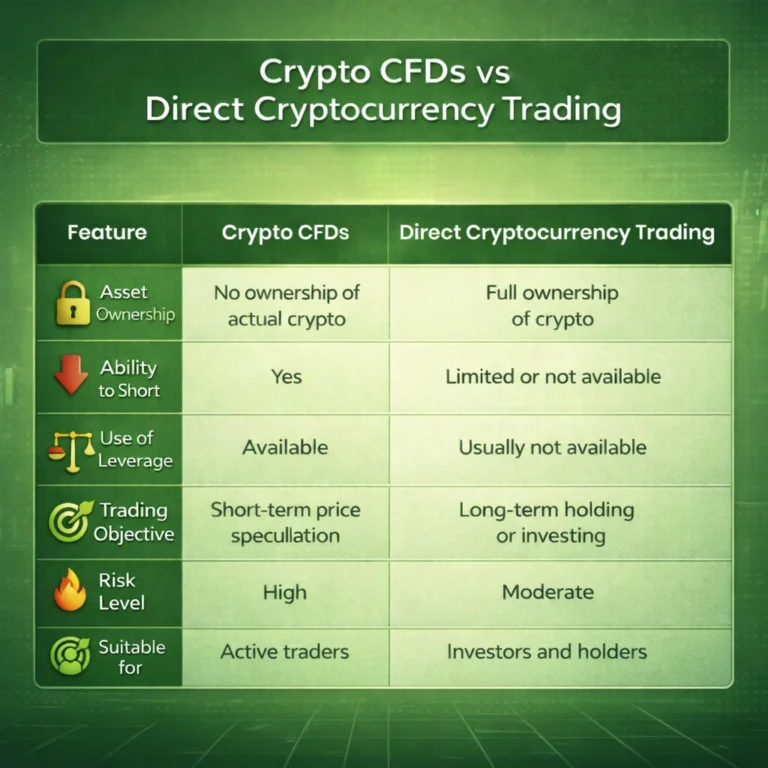
Crypto CFD trading allows traders to participate in the cryptocurrency market without owning the actual digital assets. Instead of buying coins from the primary crypto market, traders speculate on price movements using Crypto CFD instruments and crypto CFDs, making it possible to profit in both rising and falling markets.
With increasing volatility in cryptocurrencies like Bitcoin, cryptocurrency CFDs have gained popularity as flexible cryptocurrency trading tools used in modern crypto operations. Based on the core cfd definition trading model, these contracts offer leverage, enabling larger exposure with smaller capital. However, leverage also increases risk, making proper risk management essential for sustainable crypto CFD trading and long-term bitcoin mastery.
What is Cryptocurrency CFD Trading?
Cryptocurrency CFD trading involves trading contracts for difference on digital currencies without owning the actual coins. Using cryptocurrency CFDs, traders speculate on whether the price of a cryptocurrency will rise or fall, allowing them to profit from both upward and downward market movements.

This trading approach offers flexibility, as positions can be opened based on different market expectations using well known cfd definition trading principles and advanced cfd trading strategies.
A quick glance
Primary crypto markets are platforms where cryptocurrencies are directly bought and sold, such as exchanges, where traders own the actual digital assets instead of trading derivative contracts.
No, the crypto market operates 24/7 without weekends or holidays, allowing traders to buy, sell, and monitor price movements at any time globally.
A CFD is a financial contract that allows traders to speculate on asset price movements without owning the underlying asset, earning profits or losses from price differences.
CFD stands for Contract for Difference, a trading instrument where traders profit or lose based on the price change of an asset between trade entry and exit.
How Crypto CFDs Work
A Contract for Difference (CFD) is a derivative instrument that allows traders to speculate on price changes without holding the underlying cryptocurrency. In cryptocurrency CFD trading, a trader enters into a contract with a broker providing CFD services to exchange the price difference of a digital asset between the opening and closing of a trade. If the market moves in the trader’s favour, a profit is generated; if it moves against them, a loss occurs.
Crypto CFDs also allow traders to use leverage, enabling larger exposure with a relatively smaller deposit. While leverage can enhance potential returns, it also increases risk, making disciplined risk management a core part of effective cfd trading strategies, basis trading in crypto, and responsible crypto operations.
Example:
If a trader opens a Bitcoin CFD position at $40,000 with a trade size of $1,000 and the price rises by 5 per cent, the profit would be $50 before fees. If the price falls by 5 per cent, the trader incurs the same loss.
How to Start Trading Cryptocurrency CFDs
- Choose a Broker – Select a trading account with a broker that offers regulated CFD services and crypto CFD trading.
- Fund the Trading Account – Deposit the required capital into the trading account.
- Analyse Market Conditions – Use technical and fundamental analysis as part of your cfd research.
- Open a CFD Position – Decide whether to take a long or short position based on market analysis.
- Set Stop Loss and Take Profit Orders – These tools help control losses and lock in profits.
- Monitor the Trade – Keep track of market conditions and adjust the trade if necessary.
- Close the Position – Once the desired outcome is achieved or market conditions change, traders can close their position.
To start trading cryptocurrency CFDs, you need to open a trading account with a broker that offers crypto CFD trading services. Once your account is funded, you can select the digital asset you want to trade, such as Bitcoin, Ethereum, or Bitcoin Cash. This trading process is widely used across professional crypto operations, cfdl crypto platforms, and institutional CFD environments.
It is important to choose a broker that follows regulatory standards and offers transparent crypto CFD services supported by ongoing cfd regulation news updates to ensure safer trading conditions.
You then choose whether to open a long position (buy) or a short position (sell). Going long means you expect the price to rise, while going short indicates that you anticipate a price decline. This ability to trade both directions is a key advantage of crypto CFDs compared to participating directly in the primary crypto market, and is often highlighted in cfd vs stock comparisons.
When opening a position, you must specify your trade size and apply risk management tools such as stop loss and take profit orders. These are essential cryptocurrency trading tools for managing leveraged trades effectively. A stop loss automatically closes the trade if the market moves against you beyond a defined level, limiting potential losses. A take profit order closes the position once your target profit level is reached, helping traders follow disciplined cfd trading strategies.
Steps to Start Trading Crypto CFDs
Open a Trading Account:
Choose a reputable broker that offers reliable crypto CFD services and complete the required verification process. Selecting a regulated platform helps reduce operational risk.
Fund the Account:
Deposit capital according to the broker’s minimum requirements to begin cryptocurrency CFD trading.
Analyze the Market:
Study price movements using technical indicators and fundamental factors such as market sentiment and cfd regulation news.
Choose a Cryptocurrency:
Select a digital asset such as Bitcoin, Bitcoin Cash, or other widely traded cryptocurrencies.
Open a Position:
Decide whether to go long or short depending on your market outlook and preferred cfd trading strategies.
Set Stop Loss and Take Profit Levels:
Apply risk management tools to define acceptable loss and profit levels before entering the trade.
Monitor the Trade:
Track price movements and market conditions using disciplined crypto operations practices.
Close the Position:
Exit the trade once your target is achieved or if market conditions move against your expectations.
Opening a Position: Long or Short
In crypto CFD trading, traders can open a long or short position based on their market analysis and price expectations.
Long Position:
When traders expect the price of a cryptocurrency, such as Bitcoin Cash, to rise, they open a long position. If the market moves upward, the trader earns a profit. If the price falls instead, a loss occurs.
Short Position:
When traders anticipate a price decline, they open a short position. If the cryptocurrency price drops, the trader profits. If the price rises, the position results in a loss.
This ability to trade in both directions makes cryptocurrency CFDs flexible trading instruments compared to direct participation in the primary crypto market. However, traders must continuously monitor market conditions and adjust their CFD trading strategies responsibly as part of disciplined crypto operations. The ability to take short positions is one of the main reasons traders prefer crypto CFDs over traditional crypto exchanges.
Benefits of Trading Cryptocurrency CFDs
Access to a Wide Range of Digital Assets:
CFD brokers typically offer multiple cryptocurrency pairs, enabling diversification across different crypto markets.
Flexibility in All Market Conditions:
The option to open long or short positions allows traders to respond effectively to both bullish and bearish price movements.
Leverage:
Leverage enables traders to control larger positions with smaller capital, though it also increases risk and requires careful management.
High Liquidity:
Cryptocurrency markets generally offer strong liquidity, making trade execution and exits more efficient.
24/7 Market Access:
Crypto CFD markets operate continuously, allowing traders to react to global price movements at any time.
These benefits make cryptocurrency CFDs more suitable for active traders rather than long term investors, especially those pursuing professional bitcoin mastery through derivatives.
Risks of Trading Crypto CFDs
While crypto CFD trading offers flexibility, it also involves significant risks that traders must understand before entering the market.
Market Volatility:
The cryptocurrency market is highly volatile, with prices capable of moving sharply within short periods. These rapid fluctuations can result in sudden gains or losses.
Leverage Risk:
Leverage allows traders to control larger positions with smaller capital, but it also magnifies losses. Improper use of leverage is one of the main reasons traders lose money in cryptocurrency CFD trading.
Counterparty Risk:
When trading CFDs, positions are opened with a broker rather than on an exchange. This introduces counterparty risk, as traders depend on the broker’s reliability and financial stability.
Regulatory Uncertainty:
Cryptocurrency regulations continue to evolve across regions. Changes in CFD regulation news or legal frameworks can impact trading conditions and market access.
Cryptocurrency and CFD regulations vary across countries and continue to evolve. Traders should stay updated with local laws and CFD regulation news before participating in crypto CFD trading.
Market Sensitivity:
Crypto prices are heavily influenced by news events, social media activity, and technological developments, often leading to sudden price movements.
Cryptocurrency regulations and cfd regulation news continue to evolve globally, impacting trading conditions.
How to Manage Crypto CFD Trading Risks
To reduce exposure to these risks, traders should follow disciplined risk management practices.
Develop a Clear Trading Strategy:
A structured plan helps guide decision-making and prevents emotional trading during volatile market conditions.
Apply Effective Risk Management:
Using stop loss orders, controlling position size, and setting take profit levels are essential cryptocurrency trading tools for protecting capital.
Stay Informed:
Monitoring market updates, major announcements, and regulatory developments helps traders anticipate potential price movements.
Choose a Reputable Broker:
Working with a regulated broker that offers transparent CFD services reduces operational and counterparty risk
Understand How CFDs Work:
When opening a CFD trade, traders are speculating on price direction rather than buying or selling the actual cryptocurrency. This distinction is fundamental to cfd definition trading and should be clearly understood before trading.
Proper position sizing is equally important, as risking too much capital on a single trade can lead to rapid losses in volatile crypto markets.
Trading cryptocurrency CFDs allows traders to take short positions and potentially profit during market declines, which is not always possible through traditional exchanges. However, crypto markets remain highly unpredictable. Consistent use of stop loss and take profit orders is essential when managing leveraged trades.
Market Investopedia advises traders to approach crypto CFD trading with caution and conduct thorough CFD research before opening any position. Due to the high risks involved, traders should only use capital they can afford to lose.
Conclusion
Crypto CFD trading offers flexibility, leverage, and the ability to trade both rising and falling cryptocurrency markets. However, it also carries significant risks due to volatility and leveraged exposure. Traders who approach crypto CFDs with discipline, proper risk management, and continuous learning are better positioned to navigate these markets responsibly.
Market Investopedia encourages traders to build a strong foundation through research, education, and practical understanding before engaging in cryptocurrency CFD trading. Explore our guides, tools, cfd course materials, and CFD research resources to continue learning and make informed trading decisions.